Top Electric Car Manufacturers for Global Buyers
Choosing among the top electric car manufacturers is no longer a niche decision. It is a practical question for drivers comparing range, price, charging access, and dependable service. The International Energy Agency’s Global EV Outlook 2025 reports that electric car sales exceeded 17 million in 2024, representing more than one in five new cars sold worldwide. The market is expanding, but the experience still varies sharply by region. A model with impressive range may be less useful where compatible chargers are scarce.
IEA Executive Director Fatih Birol described the shift this way: “The continued growth of electric cars, which accounted for 1 in 5 cars sold last year, is reshaping the global auto industry.” That perspective helps frame this guide to Electric Car Auto brands for global buyers. It considers manufacturers’ vehicle lineups alongside real ownership factors, including charging standards, battery warranties, local parts availability, and after-sales support. Those details matter when a warning light appears far from home.
No ranking can fit every driver. Some comparisons depend on local prices, incentives, and road conditions, which change over time. This overview draws on industry reporting, but it cannot replace a test drive or a market-specific check. That limitation matters. Buyers should verify current specifications with manufacturers and compare the models available in their own country.
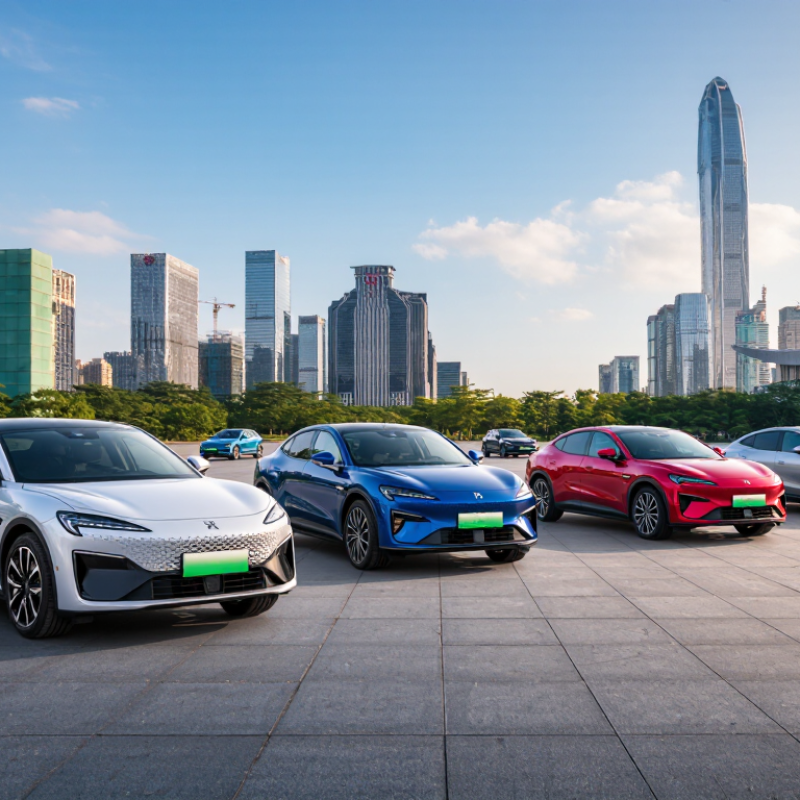
How Electric Car Manufacturers Are Compared Across Global Markets
Comparing electric car manufacturers across global markets requires more than ranking battery range or sticker price. The International Energy Agency’s Global EV Outlook 2024 reported nearly 14 million electric car sales in 2023, about 18% of new car sales worldwide. China accounted for roughly 60% of those sales, while Europe and the United States had different market shares and policy conditions. A manufacturer’s strength in one region may not transfer neatly to another.
Buyers should compare locally available models, real-world range, charging access, warranty coverage, repair networks, and total ownership costs. The IEA report also describes large regional differences in charging infrastructure and market growth. That matters. A long-range vehicle offers little comfort if reliable public chargers are scarce on a regular route. Likewise, cold weather, high-speed driving, and heavy loads can reduce practical range. Published figures need context.
Safety assessments and battery performance deserve close attention, but comparisons are not always straightforward. Test methods, trim levels, and software updates may differ between markets. The Global EV Outlook is useful for understanding sales and adoption; it does not establish which manufacturer best serves every buyer. I would also treat advertised range as a starting point, not a promise. That distinction is easy to overlook. A fair comparison uses local prices and service access, then checks independent test results for the exact vehicle version being considered.
Major Electric Car Manufacturers and Their Regional Strengths
Electric-car manufacturers often gain an edge by building near major suppliers, skilled workers, and large customer markets. In China, dense battery and electronics supply chains support high production volumes and frequent model updates. Buyers may find many price points, though software quality and long-term service can vary by vehicle and market. That matters after the showroom.
European manufacturers often emphasize compact designs, efficient use of cabin space, and engineering suited to varied road conditions. Their vehicles can work well in older cities, where parking spaces are narrow and daily trips are short. However, charging access differs sharply between urban centers and rural routes. A polished cabin cannot fix a sparse charging network.
North American manufacturers often focus on larger vehicles, longer driving distances, and locally built supply chains. These strengths suit households that travel far or need extra cargo room, but large batteries can add weight and cost. East Asian manufacturers also bring extensive electronics and battery expertise, with export experience across many markets. Still, factory strength does not guarantee easy repairs everywhere. A buyer should compare nearby service options, winter range, and charging compatibility, not just headline range. Regional advantages are real, but they are not permanent; costs, infrastructure, and customer needs keep changing.
Comparing Vehicle Range, Technology, and Model Choices
For global buyers, electric cars are best compared by usable range, charging access, and the journeys they must handle. A quoted range is a test estimate, not a promise. Cold mornings, highway speeds, heavy loads, and cabin heating can reduce distance between charges. That matters. Check whether published figures use a testing standard relevant to your market, then leave a practical buffer for daily travel.
Technology also shapes the ownership experience. Battery preconditioning can help prepare a car for faster charging, while clear navigation may show compatible charging stops along a route. Yet software features vary by trim and region, so confirm what is actually available before comparing prices. Model choices matter just as much: a compact car may suit narrow streets and home charging, while a larger vehicle can offer more luggage room for family trips. Not always. Bigger batteries may add cost and weight without helping buyers who rarely drive long distances. A careful comparison should include cabin space, charging speed, warranty terms, and service support nearby. Even then, some details are hard to judge from a specification sheet alone. A test drive and a realistic charging plan can reveal what the numbers miss.
Top Electric Car Manufacturers for Global Buyers - Comparing Vehicle Range, Technology, and Model Choices
A brand-neutral comparison of common electric-vehicle portfolio segments. The figures below are indicative segment-level ranges, not specifications for a particular manufacturer or vehicle.
| Vehicle segment |
Typical certified range band (WLTP) |
Common battery capacity |
Charging technology commonly available |
Typical body-style choices |
Buyer considerations |
| Small city car |
Approximately 150–300 km |
Approximately 20–45 kWh |
AC charging is common; DC fast charging is available on some versions, often at lower peak power than larger vehicles. |
Three-door or five-door hatchback; compact crossover |
Well suited to urban trips and shorter commutes. Check rear-seat space, motorway range, and whether DC fast charging is included. |
| Compact family car |
Approximately 250–450 km |
Approximately 40–75 kWh |
AC home or workplace charging is widely supported; many models offer DC rapid charging. |
Hatchback; compact sedan; small crossover |
Often balances purchase cost, everyday range, and practicality. Available battery and charging options can differ by market and trim. |
| Mid-size sedan |
Approximately 400–700 km |
Approximately 60–100 kWh |
DC fast charging is common, with peak rates varying by battery design, charger, temperature, and state of charge. |
Sedan; liftback |
Typically prioritizes motorway efficiency and longer-distance travel. Compare charging-curve performance, not only the advertised peak rate. |
| Compact and mid-size SUV |
Approximately 300–600 km |
Approximately 50–100 kWh |
AC charging is common; many versions support DC fast charging and battery preconditioning. |
Compact SUV; mid-size SUV; five-seat crossover |
Offers a higher seating position and flexible cargo space. Larger wheels, all-wheel drive, and cold weather can reduce real-world range. |
| Large or premium SUV |
Approximately 350–650 km |
Approximately 75–120 kWh |
DC fast charging is widely offered in this segment; some vehicles include route-based battery preconditioning. |
Large SUV; three-row SUV; performance crossover |
Useful for passengers and luggage, but size, weight, and optional equipment can increase energy consumption. |
| Electric pickup or utility vehicle |
Approximately 300–550 km |
Approximately 75–130 kWh |
DC fast charging is available on many models; towing and heavy loads can substantially increase energy use. |
Pickup; crew cab; utility van |
Compare payload, towing capacity, charging access, and range while working. Published range usually reflects testing without a heavy trailer. |
Range bands are broad indicative WLTP-style estimates for vehicles in these segments and are not directly comparable with EPA figures. Actual range and charging performance depend on the specific vehicle, trim, wheels, climate, driving speed, load, charging equipment, and local test cycle. Vehicle availability and equipment vary by country.
Global Availability, Charging Support, and After-Sales Service
For global buyers, a car’s advertised range matters less if local support is hard to find. Check whether the exact model and battery configuration are sold in your country. Import versions may differ in charging ports, software, or warranty coverage. Ask a local service center about parts availability and typical repair wait times. Small details matter.
Charging support should fit the routes you actually drive. Confirm connector compatibility, payment options, and whether public chargers appear in the vehicle’s navigation system. A useful test is to map a regular commute and one longer trip, then check charger spacing and opening hours. For home charging, ask an electrician to assess your parking space and supply before relying on an installation estimate. Plans can change.
After-sales service is easy to overlook. Find out where high-voltage repairs are performed, how roadside assistance works across borders, and whether warranty repairs require an authorized workshop. Request written terms, not just a reassuring sales conversation. In remote areas, a replacement part may take longer to arrive; that possibility deserves attention. I would also speak with local owners, while remembering that one person’s experience is not a service guarantee. A polished app cannot replace trained technicians, clear communication, and parts that are available when needed.
Factors Buyers Should Weigh When Choosing a Manufacturer
A manufacturer’s reputation matters, but local support matters more when a car needs attention. Check whether trained technicians and replacement parts are available near your home, not only in major cities. Ask how warranty repairs are handled across borders, and get the terms in writing. A polished showroom tells you little about service six months later.
Match the vehicle to your actual routes. A published range is measured under specific conditions; cold weather, highway speeds, and heating can reduce it. Ask for independent test results from climates like yours. Then check the charging connector, onboard charging limits, and compatibility with networks you expect to use. Small details matter. A cable that does not fit is a real inconvenience.
Battery durability, software support, and repairability deserve equal scrutiny. Ask how battery health is assessed and what coverage applies if capacity falls. Find out how long security updates are expected, and whether essential functions depend on a mobile app. No checklist catches everything. I would also inspect the owner’s manual and speak with current drivers, though their experiences may not match yours. Compare total ownership costs, including insurance, home charging equipment, and routine service—not just the purchase price.