Electric Trucks are moving from pilot projects into daily freight operations. Global buyers now compare more than battery size or advertised range. They examine payload, charging access, service coverage, safety systems, and total ownership cost. A truck may promise 400 kilometers, yet winter heating, hills, and heavy cargo can reduce that figure.
This guide examines China’s top 10 Electric Trucks manufacturers for international buyers. It considers production experience, battery technology, vehicle platforms, export capability, and after-sales support. Brands such as BYD, Foton, JAC, Sinotruk, Dongfeng, and others serve different transport needs. Some focus on urban delivery. Others target mining, ports, construction, or long-haul routes.
Daimler Truck CEO Martin Daum once stated, “We are committed to making CO2-neutral transport a reality.” That ambition reflects the industry’s direction, but adoption remains uneven. Charging standards, road conditions, local incentives, and grid reliability still shape buying decisions. A low purchase price alone cannot guarantee a successful fleet.
Real-world details matter. Can the truck charge beside a warehouse during a short loading break? Can technicians diagnose battery faults in a remote region? What happens after five years of daily use? These questions deserve clearer answers from manufacturers. Some published specifications are difficult to compare directly. Buyers should request independent testing, warranty terms, maintenance records, and delivered-cost quotations.
This ranking is practical, not absolute. A city distributor may value maneuverability more than maximum range. A construction operator may prioritize torque, ground clearance, and rugged battery protection. The strongest choice depends on the route, cargo, climate, and operating schedule. There is no perfect Electric Trucks solution yet. Careful evaluation remains essential.
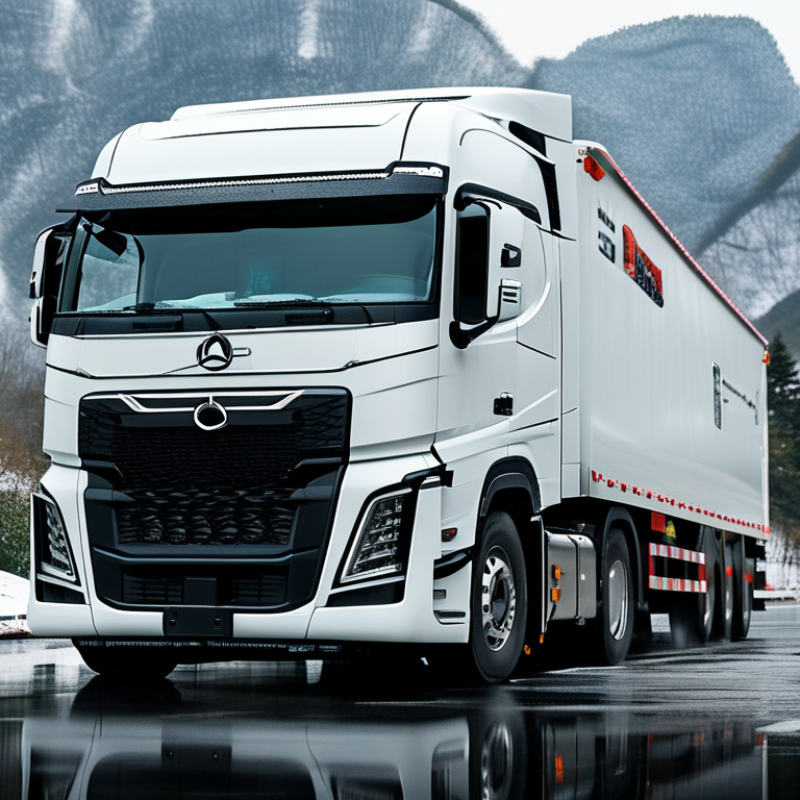
China’s electric truck market is expanding across several practical segments.
Urban delivery fleets use light trucks for short routes and frequent stops.
Medium-duty vehicles serve food distribution, waste collection, and municipal services.
Heavy electric trucks are entering ports, mines, construction sites, and fixed-route logistics.
The International Energy Agency’s Global EV Outlook 2024 reported that China represented more than 80% of global electric truck sales in 2023. Policy support helps, but operating economics matter more. High diesel prices, predictable routes, and lower maintenance costs improve fleet calculations. Battery swapping also supports intensive operations where charging time is difficult.
Yet the market is not a straight-line success story. Payload loss, winter range, charging access, and battery replacement costs still require careful testing. Public data remains fragmented, which makes simple comparisons unreliable.
Tips: Match the truck to its route, payload, and daily distance. Request tested range under loaded conditions, not only laboratory figures. Check charger compatibility, service coverage, warranty limits, and battery residual value. The China Association of Automobile Manufacturers and IEA provide useful market references, but buyers should verify local fleet data before ordering. Small pilot fleets often reveal problems that brochures miss.

Selecting the top 10 Chinese electric truck manufacturers requires more than comparing advertised range or purchase prices. A reliable assessment begins with verified production capacity, factory quality systems, and export experience. Auditors should inspect assembly lines, battery testing rooms, welding quality, and final inspection records. Real evidence matters.
Truck performance must match the buyer’s route. Review payload ratings, gradeability, charging time, battery chemistry, and thermal management. Test results should cover hot summers, cold mornings, hills, traffic, and repeated loading cycles. A 300-kilometer range can change sharply with heavy cargo or winter heating. That detail is often overlooked.
Service capability also separates serious manufacturers from temporary suppliers. Evaluate warranty terms, spare-parts availability, technician training, remote diagnostics, and response times in the target market. Check compliance with local safety, road, battery transport, and vehicle certification requirements. Fleet managers should request references from comparable operations and examine total operating costs over several years. No scorecard is perfect. A spreadsheet may hide driver comfort, charging delays, or difficult software updates. Independent inspections and practical pilot runs can expose these weaknesses before a large order is approved. Manufacturers that share test data, admit limitations, and adapt specifications deserve stronger consideration.
| No. | Selection Criterion | Buyer Verification Standard | Recommended Weight | Why It Matters for Global Buyers | Priority |
|---|---|---|---|---|---|
| 1 | Vehicle Type and Application Fit | Confirm suitability for urban distribution, port operations, mining, construction, sanitation, refrigerated transport, or long-haul logistics. | 15% | An electric truck must match route length, road conditions, payload, body configuration, and daily operating hours. | Critical |
| 2 | Battery Chemistry and Safety | Request battery chemistry, UN 38.3 transport documentation, thermal-management specifications, protection ratings, and safety-test records. | 15% | Battery safety, usable capacity, temperature performance, and service life directly affect operating reliability and total cost. | Critical |
| 3 | Payload, GVW, and Performance | Compare rated gross vehicle weight, legal payload, gradeability, turning radius, axle loads, and performance under the intended load. | 12% | A higher nominal battery range is not useful if payload capacity or climbing ability is insufficient for the route. | Critical |
| 4 | Driving Range and Energy Efficiency | Evaluate tested range under representative payload, ambient temperature, traffic, terrain, auxiliary loads, and legally recognized test cycles. | 12% | Real-world range determines route coverage, charging frequency, vehicle utilization, and fleet productivity. | Critical |
| 5 | Charging Compatibility and Time | Check charging connector, voltage, maximum charging power, AC/DC compatibility, charging curve, site electrical capacity, and local standards. | 10% | Charging infrastructure can determine whether a vehicle can be deployed immediately or requires costly site upgrades. | Critical |
| 6 | International Compliance and Certification | Verify homologation documents for the destination market, including vehicle safety, electromagnetic compatibility, braking, lighting, and battery transport requirements. | 12% | Regulatory compliance reduces import delays, registration problems, legal exposure, and unexpected modification costs. | Critical |
| 7 | After-Sales Service and Spare Parts | Assess local service partners, technician training, spare-parts availability, diagnostic support, response time, and warranty claim procedures. | 10% | A strong service network minimizes downtime and is especially important for commercial fleets operating on fixed schedules. | Critical |
| 8 | Warranty and Battery-Life Support | Review warranty duration, mileage or cycle limits, battery capacity-retention terms, exclusions, replacement procedures, and warranty-transfer conditions. | 8% | Battery replacement is a major lifecycle expense, so transparent warranty terms help control long-term financial risk. | High |
| 9 | Total Cost of Ownership | Calculate purchase price, electricity, maintenance, tires, insurance, financing, infrastructure, taxes, residual value, and expected downtime. | 4% | The lowest purchase price does not always provide the lowest operating cost over the vehicle’s service life. | High |
| 10 | Manufacturing Quality and Delivery Capability | Verify quality-management certification, factory audit results, production capacity, delivery lead time, inspection procedures, and export documentation capability. | 2% | Consistent production quality and dependable delivery are essential for fleet procurement and multi-unit deployment. | High |
| Total Evaluation Weight | 100% | Use documented evidence and route-specific testing before final procurement. | |||
Evaluation note: Manufacturer rankings should be based on verifiable technical documents, destination-market compliance, operating data, service capability, and total cost of ownership rather than price or claimed range alone.
China’s top ten electric truck manufacturers now serve logistics, ports, construction, sanitation, and long-haul routes. Their strengths differ sharply. Some focus on compact urban delivery trucks with narrow turning circles. Others build heavy tractor units for fixed-route freight. Several specialize in battery-swapping systems, while others offer high-capacity charging platforms.
The leading profiles reveal a practical market. One manufacturer emphasizes lightweight city trucks. Another develops refrigerated vehicles for controlled-temperature cargo. A third targets mining and quarry operations with reinforced frames. Two concentrate on port drayage and automated fleet management. Another combines electric chassis with refuse-collection equipment. The remaining manufacturers focus on regional freight, concrete transport, and export-ready platforms. The IEA’s Global EV Outlook 2024 identifies China as the world’s largest electric-vehicle market. CALSTART’s Global Zero-Emission Vehicle Deployment 2024 report also places China among the strongest markets for commercial zero-emission deployment. However, public sales data often combines buses, vans, and trucks. That weakness makes manufacturer comparisons less precise.
Tips: Check payload after battery weight, not before. Request real route data, charging curves, winter range, and service response times. A cheaper truck may lose value through long charging delays. Battery swapping looks attractive, but local station coverage remains uneven. Buyers should inspect warranty exclusions carefully. Even experienced fleets can misjudge residual value.
For global buyers, an electric truck’s battery should be judged beyond its advertised capacity. A 300 kWh pack may deliver different usable energy after thermal protection and reserve limits. Battery chemistry affects weight, safety, cycle life, and cold-weather behavior. Ask for verified test data, not only laboratory range figures. In real fleet trials, a loaded truck traveling 180 to 250 kilometers can consume far more energy on steep roads or during winter mornings.
Payload and vehicle performance must be measured together. A heavier battery can reduce cargo capacity, especially on smaller rigid trucks. Check the legal gross vehicle weight in the target market. Motor torque, axle strength, suspension tuning, and regenerative braking directly influence hill climbing and downhill control. A truck that feels powerful when empty may respond slowly at maximum payload. That difference matters at construction sites.
Charging speed also depends on battery temperature, charger output, and daily operating schedules. A 180 kW charger may restore useful energy during a driver’s break, but site power limits can delay installation. Confirm connector standards, communication protocols, spare-parts access, and warranty coverage before purchase. Range estimates still need independent verification. Payload changes. Weather changes. Route planning software can improve accuracy, although it may not predict every traffic delay or steep access road. Some test results remain incomplete, and buyers should document those gaps instead of accepting polished brochures.
For global buyers, the top electric truck manufacturers should be judged by export readiness, not brochure range. The IEA reported nearly 54,000 electric trucks sold worldwide in 2023, with China representing more than 80% of sales. This scale supports production experience, but it does not guarantee smooth overseas delivery. Buyers should request market-specific type approval, battery safety evidence, electromagnetic compatibility testing, and cybersecurity documentation. UN R100, UN R10, UN R155, and UN R156 may apply in different markets. Check every certificate’s validity and testing scope.
Service capability matters after arrival. A practical supplier should provide remote diagnostics, spare-parts stock, technician training, and response times in writing. Ask for a regional repair map, not only a service promise. Import costs also include freight, tariffs, charging equipment, insurance, software updates, and battery warranties. BloombergNEF reported that average lithium-ion battery pack prices fell to 115 US dollars per kWh in 2024, yet pack prices vary by chemistry, volume, and warranty terms. A cheaper truck may need more expensive local support. That calculation is often incomplete. Compare total cost of ownership over five years, including electricity, maintenance, downtime, financing, and residual value. Pilot testing on real routes remains wise, because laboratory range figures can disappoint in winter, hills, or heavy traffic.